Friday, February 25, 2005

Musical creativity still flows
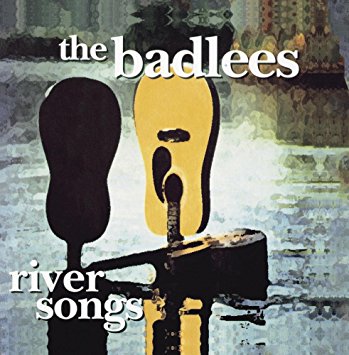


10 years later, The Badlees 'River Songs' album still reveals its greatness

By ALAN K. STOUT
MUSIC ON THE MENU
February 25, 2005

This week marks the 10th anniversary of the The Badlees' monumental "River Songs" album. It is the album that landed the band the first of two national recording contracts and eventually put it on the national charts, VH1 and the stages of some of the country's largest arenas.

It is an album that helped forever change the face of music in Northeastern Pennsylvania.

I went back down to that special river last weekend and swam in its waters. I popped "River Songs" into the car stereo and took it for a good long ride, amid the mountains and valleys that helped inspire it. I drove along the Susquehanna, for which the album was named, and I cruised by some of the bars and clubs where its songs were first played. I recalled the magic of hearing the album for the first time, and I again appreciated its significance.

Because The Badlees are a true roots-rock unit, their music remains fashion-free and timeless. "Angeline Is Coming Home" is still a terrific pop song, though its almost biblical, non-judgmental "Prodigal Son" theme clearly makes it so much more. Though the tune might still be in karaoke machines across the nation, and I once heard its familiar melody set to Muzak in a supermarket, its vibrant and celebratory message of unconditional friendship still makes it a lyrical gem and a bit of a pop oddity.

(I don't know how many of the millions who have heard the song know it's actually about a woman coming home from rehab, but, to their credit, the band and songwriting partner Mike Naydock have always told anyone who asks.)

"Fear of Falling," used by NBC-TV during the 1996 Winter Olympics, sounded like an instant classic a decade ago and has stood the test of time as well, and the Springsteen-esque "Angels of Mercy," with its soaring chorus, driving power chords and thumpy bass line, remains one of the best tracks on the album. The nearly two-year "River Songs" tour swung across America not once but twice, and "Angels of Mercy," spiced with a keen, post-grunge sense of optimism and humor, was the perfect opening song almost every night.

The eclectic instrumentation of "River Songs" also contributes to its genius. Mandolins, dulcimers, kazoos, organs and dobros all find their way into its stirring 11 tracks, and you'd again have to dip into the Springsteen catalog to find a more thoughtful and perfect use of simple harmonica than the poignant "Ore Hill." At the time of its release, I recall, friends said "Ore Hill" brought tears to their eyes. Such a connection is difficult to make with music, but The Badlees — named by Times Leader readers as their favorite band two months before the release of "`River Songs" — had made that connection.

"River Songs" was released locally in February 1995, and, after the band signed with Polydor/Atlas records, re-released nationally in October. It was an exciting time, not only for a fan but also for a journalist covering a band that was hitting on all cylinders. When people sometimes ask me for my favorite professional moment in journalism, it takes only one second to answer. It was the fall of that year, watching the group perform at the 18,000-seat Buffalo Memorial Auditorium, only eight months after seeing the band playing in local clubs, often for just a few hundred people.

"We'd like to thank Robert Plant and Jimmy Page for having us here tonight," vocalist Pete Palladino said.

Some of the plentiful "River Songs" stories have never been told. Gregg Allman was so impressed with the album that he once asked the group's principal songwriter, Bret Alexander, to help him write some songs. And when Polydor asked legendary mixer Bob Clearmountain to remix "Angeline Is Coming Home" for national release, Clearmountain called Alexander and said he thought the self-produced song sounded fine as it was.

Still, despite its excellent production, gripping harmonies and clever musicianship, it's the lyrics that make "River Songs" such a special album. Listen to the wit of the country-flavored "I Liked You Better When You Hated Yourself," the wisdom of the stompy "Nothing Much of Anything" and the breezy flow of "Gwendolyn," which can still draw the most reluctant wallflowers to the dance floor, and you, too, will again feel its magic.

Listen to the extraordinary depth of "Bendin' The Rules," which tells the tale of a struggling family desperately trying to provide medical attention to its ailing son, and follow the cinematic images of the epic "Song For A River," and you once again will be reminded of its greatness.

"River Songs," 10 years later, remains a mini-masterpiece, and though the band has since recorded several more outstanding albums, it remains monumental not only because of its quality but because of its importance. Though The Badlees time with Polydor was turbulent and ultimately - due to the Polygram/Seagrams sale -  disappointing, it did open at least a few musical doors not only for their career but for dozens of other area bands who now present their art with confidence and whose art is now given a fair listen. Because of "River Songs" we know bands from our home region can make a record just as good if not better than any we've heard.

I revisited that special river last weekend, and I saw "River Songs" for all it once was, all it remains and all it has become: 

A milestone.


Saturday, December 4, 2004

A mighty fine collection between pals


Mighty Fine Wine's fourth CD offers its best work to date


By ALAN K. STOUT
MUSIC ON THE MENU
December 3, 2004

SCRANTON - Mighty Fine Wine has found its groove. Three years after the release of its first CD, the hard-playing, hard-drinking rock 'n' roll blues band seems to be hitting on all cylinders. The live shows cook. The songs jell. The vibe is evident.

“Everybody has their own individual job, and everybody does their part in making one great sound,”' says bassist and vocalist Timmy Hopkins. “That's what we do. We try to find ways to make it all blend together by understanding who's in the limelight at one particular time. There's no egotistical behavior. There's no ‘It's about me.' It's about us, and it's about the song, and you put the song first.”

The band's fourth CD,  “Vino Vidi Vici,” is its best work to date. It will be released Saturday at a special CD-release party in Scranton. It also will be available at Gallery of Sound stores Tuesday. The 13-song collection was recorded at Sound Investment studios in Scranton, with additional mixing and mastering in New York City and Florida. Tracks include “Junk,'”  “I Am Somebody,”  “Dedicated,''  “Two of a Kind” and “Skult.''

Hopkins says the band, which also includes John “Fud” Zavacki, Jay Noble, Bill Orner and Bob Schappert, has been blessed with the support it's received from the local music community. He adds that people might connect with the band simply because they see the connection between its members.

“When we're on stage, there's definitely a chemistry between us,” he says. “That's why we play music together. And obviously that chemistry that we have transcends.”

Hopkins says he has no problem with the band's hard-living reputation. If anything, he embraces it.

“I have four brothers that I'm stuck with, and we have fun together on stage and off stage,” he says. “That's who we are. We work hard, and we (expletive) play hard. When we play music, we play as hard as we possibly can, and when we let loose, we let loose.”

 Hopkins gives props to bands such as Breaking Benjamin and The Badlees, who have taken their careers and their music to  “another level.” He hopes Mighty Fine Wine will do the same.

“It took us a while to get that groove and that sound that we wanted,”  he says. “But now that we've got it, we're trying to build on it even more.”

---------------------------

WHO: Mighty Fine Wine, with Okay Paddy
WHERE: Moonshine Theater, 335 Adams Ave., Scranton
WHEN: Doors at 8:30 p.m., music at 9 p.m.
TICKETS: $10 in advance, $12 at the door
INFO: www.mfwmusic.com
ON THE RADIO: Mighty Fine Wine will appear Sunday on `Music On The Menu Live.' Showtime is 9 p.m. on WDMT-FM, 102.3 - The Mountain.

 (This story was first published in The Times Leader on December 3, 2004. Tim Hopkins passed away five months later.)


Friday, April 9, 2004

COBAIN'S GIFT


MUSIC, IMPACT CLEAR DECADE AFTER DEATH

By ALAN K. STOUT
MUSIC ON THE MENU
April 9, 2004    

Ten years ago this week, Kurt Cobain was found dead in a room above the garage of his Seattle home. He had placed a 20-gauge shotgun to his head and chosen to end his life.

Cobain was 27 at the time, just a few months older than I, and though some considered him the spokesman of my generation, I never connected with him, nor his band, Nirvana, that much. Truthfully, I just didn't understand him.

He seemed to carry his fame and Nirvana's commercial success like a cross, yet wasn't it he who signed a big record deal with a major label? Wasn't it he who appeared in those expensive music videos?

If he had chosen, Cobain simply could have kept playing Seattle's clubs, but, at least initially, he tried to become a rock star, and when "Nevermind" sold 10 million copies, it seemed he'd gotten just what he wanted.

But he didn't want it. And I didn't get that, nor did I get too excited about his band's sometimes gloomy persona.

I grew up seeing very charismatic bands in concert that were not only great musicians, but also great showmen. Yet Cobain, the biggest rock star in the world and the recipient of much critical acclaim, also was one of the the so-called angst-filled "shoe-gazers." These were the groups - and there were others from the Seattle grunge scene - that seemed like anti-entertainers.

Some said the grand performers of the '80s were too indulgent, but to me, copping a "we'd-rather-not-be-here" attitude while on stage before a house full of fans was equally self-absorbed.

And so, at least initially, I didn't get Kurt Cobain.

After his death, and even in the months leading up to it, some media reported he had suffered from depression, which was completely foreign to me then. How could a seemingly happily married man with a beautiful baby and the founder of the biggest band in the world be depressed, I and many others asked. But now, 10 years later, after seeing depression up close, I no longer judge him on that. It is a serious condition and very real, and no matter how pretty a picture you might paint of your life, it can still consume you.

Even though it seemed so cowardly at the time, I now have some understanding and even some empathy for Cobain in the way he ultimately decided to deal with his condition. Condone it? No. Understand it? Yes, partially.

Considering how silly and formulated some hard-rock music had become by the time Nirvana released "Nevermind," I also can now better understand Cobain's approach to both his music and even his live presentation. Nirvana - and Pearl Jam and Soundgarden, who I thought were much better bands - gave rock music a swift and hard kick in the tail just when it needed it. They were energetic yet without the pretense and, save for the commercial explosion of hip-hop, there hasn't been a musical movement like it since.

Grunge offered change, and Cobain was at the forefront. He mattered.

I get that now, and I get him a lot more.

The night his body was found, I was at Market Street Square seeing a band called Tribes. They were one of the biggest groups in town at the time and specialized in covering the big alternative sounds of the day. About 2 a.m., as the night was winding down, they played Nirvana's  "Heart Shaped Box," which I always thought was their best song.

It was a moment I've always remembered and one I now hold with some fondness.

Someone asked me last week if Cobain's death marked the end of the grunge movement. Probably not. It would have come anyway. By the mid-'90s, "shoe-gazing" and bands like Silverchair, Bush and even Stone Temple Pilots, whom some considered Nirvana and Pearl Jam copycats, were already getting some backlash. And I'll never forget the day I saw a mannequin in Boscov's dressed in flannel.

Grunge, despite its purest intentions, was not immune to corporate America. It had become fashion, and fashion always dies.

Cobain missed most of that. Maybe that's how he wanted it. He will always be 27, blond-haired and wrinkle-free, and rather than be remembered for all the silly things some bands that stick around too long are sometimes remembered for, he's remembered for what mattered to him most: his music.


 ------------
(Originally published in The Times Leader on April 9, 2004. To follow Alan K. Stout's musings on music, visit www.facebook.com/musiconthemenu.)


Friday, January 2, 2004


WITH 'LET IT BE,' LESS IS MUCH, MUCH MORE

January 2, 2004

By ALAN K. STOUT
MUSIC ON THE MENU

Paul McCartney was indeed right.

McCartney has always said that he dislikes The Beatles' “Let It Be” album, mainly because of the strings and orchestration added to the original sessions, which were tacked on by renowned knob-twirler Phil Spector after the Fab Four decided to scrap the project. To McCartney, simpler was better, and he's been quoted as saying he simply hated what Spector did to some of the album's tracks, particularly his own “The Long and Winding Road.''

Now, with the recent release of  "Let It Be ... Naked,'' the world can finally decide for itself whether Sir Paul was right, and we can hear some of the songs as he had originally hoped and intended.

As anyone who's ever seen the "Let It Be'' film can attest, the album-in-making documentary shows a disjointed band that had grown greatly apart, but the album - even with Spector's lush tweaking - always did a fine job of masking such internal problems and letting the music shine.

"Naked,'' however, does so even better.

Here, the band sounds marvelously tight, and there's a fresh energy and warmth to the tracks, which have been remixed and digitally fine-tuned. It's just John, Paul, George and Ringo, original producer George Martin and some keyboard work from Billy Preston, and unlike the film, the vibrant recording gives no indication that the group is in its final stages.

(Only "Abbey Road,'' the band's true swan song, would follow.)

“It's a beautiful CD,” said Ringo Starr in an interview with Rolling Stone earlier this year, after he first heard the “`Naked” remixes. “Paul was always totally opposed to Phil, and I told him on the phone, 'You're bloody right again. It sounds great without Phil.' Which it does. Now, we'll have to put up with him telling us over and over again, `I told you so.' "

In the same interview, original "Let It Be" engineer Glyn Johns went as far as to say that Spector  “puked all over'' some of the album's tracks and added that: “If you hear `The Long and Winding Road' without all of that schlock on it, it's fabulous just as it is.''

Indeed.

What's most striking when listening to the stripped down version of  “The Long and Winding Road'' is the beauty of the piano, which was completely lost in the Spector mix and perfectly accents the sadness of the song's lyrics. The `"Naked'' version also features a different vocal track than that of the original “Let It Be'' album. Here, McCartney sings, “Many times, I've been alone, and many times I've cried, anyway you've always known, the many ways I've tried,'' rather than ``anyway you've never known, the many ways I've tried.''

The changing of one simple word changes the meaning of the entire verse, and in some ways, changes the feel of the entire song.

There's also a stronger sense of soul on numbers such as “I've Got A Feeling,'' and of band unity on tracks like tracks like “Don't Let Me Down,'' where Lennon and McCartney, whose personal relationship was already strained, can be heard singing together in perfect harmony. The sequencing of songs is also superior to that of the original and provides for a much better sense of flow and balance.

Personally, I've never minded Spector's “schlock'' that much, and have always named “The Long and Winding Road'' as my all-time favorite Beatles number, but after listening to “Naked,'' it seems that the band's bassist may have indeed known best.

With these wonderful tracks, Spector simply should have abided by the album's title.

He should have let them be.


WITH 'LET IT BE,' LESS IS MUCH, MUCH MORE

January 2, 2004

By ALAN K. STOUT
MUSIC ON THE MENU

Paul McCartney was indeed right.
McCartney has always said that he dislikes The Beatles' “Let It Be” album, mainly because of the strings and orchestration added to the original sessions, which were tacked on by renowned knob-twirler Phil Spector after the Fab Four decided to scrap the project. To McCartney, simpler was better, and he's been quoted as saying he simply hated what Spector did to some of the album's tracks, particularly his own “The Long and Winding Road.''

Now, with the recent release of  "Let It Be ... Naked,'' the world can finally decide for itself whether Sir Paul was right, and we can hear some of the songs as he had originally hoped and intended.

As anyone who's ever seen the "Let It Be'' film can attest, the album-in-making documentary shows a disjointed band that had grown greatly apart, but the album - even with Spector's lush tweaking - always did a fine job of masking such internal problems and letting the music shine.

"Naked,'' however, does so even better.

Here, the band sounds marvelously tight, and there's a fresh energy and warmth to the tracks, which have been remixed and digitally fine-tuned. It's just John, Paul, George and Ringo, original producer George Martin and some keyboard work from Billy Preston, and unlike the film, the vibrant recording gives no indication that the group is in its final stages.

(Only “Abbey Road,'' the band's true swan song, would follow.)

“It's a beautiful CD,” said Ringo Starr in an interview with Rolling Stone earlier this year, after he first heard the “`Naked” remixes. “Paul was always totally opposed to Phil, and I told him on the phone, `You're bloody right again. It sounds great without Phil.' Which it does. Now, we'll have to put up with him telling us over and over again, `I told you so.' ''

In the same interview, original “Let It Be'' engineer Glyn Johns went as far as to say that Spector  “puked all over'' some of the album's tracks and added that: “If you hear `The Long and Winding Road' without all of that schlock on it, it's fabulous just as it is.''

Indeed.

What's most striking when listening to the stripped down version of  “The Long and Winding Road'' is the beauty of the piano, which was completely lost in the Spector mix and perfectly accents the sadness of the song's lyrics. The ``Naked'' version also features a different vocal track than that of the original “Let It Be'' album. Here, McCartney sings, “Many times, I've been alone, and many times I've cried, anyway you've always known, the many ways I've tried,'' rather than ``anyway you've never known, the many ways I've tried.''

The changing of one simple word changes the meaning of the entire verse, and in some ways, changes the feel of the entire song.

There's also a stronger sense of soul of numbers such as “I've Got A Feeling,'' and of band unity on tracks like tracks like “Don't Let Me Down,'' where Lennon and McCartney, whose personal relationship was already strained, can be heard singing together in perfect harmony. The sequencing of songs is also superior to that of the original and provides for a much better sense of flow and balance.

Personally, I've never minded Spector's “schlock'' that much, and have always named “The Long and Winding Road'' as my all-time favorite Beatles number, but after listening to “Naked,'' it seems that the band's bassist may have indeed known best.

With these wonderful tracks, Spector simply should have abided by the album's title.

He should have let them be.


Sunday, August 31, 2003


Beatle craze a local hit

Times Leader - August 31, 2003
By ALAN K. STOUT
TIMES LEADER STAFF WRITER
 August 31, 2003 

 SCRANTON - The history of the world's most influential rock 'n' roll band can be traced to the streets and pubs of Liverpool, England. It was there more than 40 years ago that John Lennon, Paul McCartney, George Harrison and Ringo Starr formed The Beatles and planted the seeds for a musical explosion known as “Beatlemania.''

What most people might not know, however, is that once The Fab Four brought their music to America, another blue collar town was instrumental in relaying the group's music to its millions of fans.

Scranton, Pennsylvania.

Throughout the 1960s, The Beatles' label, Capitol Records, operated one of its largest record manufacturing plants in Scranton. According to some reports, it was the largest such plant in the United States and at the height of “Beatlmania'' its employees worked long shifts pressing copies of the group's  records while trying to keep pace with demand.

 “All of a sudden it just took off,'' says Paul Lalley, 74, of Scranton, who worked at the plant until it closed in 1978. “It was big over in England, but it just carried right over the ocean into this country and it was just absolutely phenomenal.''

 Lalley says everything changed once The Beatles made their famous appearance on the Ed Sullivan Show in 1964. Throughout the entire decade, he says, albums such as “Abbey Road'' and “Sgt. Peppers Lonely Hearts Club Band'' were all pressed in Scranton.

 “We worked around the clock and probably had what were the best years in the recording business in many, many, many years,'' says Lalley. “In the shipping and receiving department, it was nothing to work 10, 12 or 14 hours a day. We had three shifts going at one time and we probably had 800 to 1,000 people there.''

 According to Alan Sweeney, president of the Lackawanna Historical Society, the history of making records in Northeastern Pennsylvania dates back to the former Scranton Button Co. That company, says Sweeney, also made phonograph records and even pressed copies of Irving Berlin's “Over There”' during the first World War. The Scranton Button Co. later changed its name to the Scranton Record Manufacturing Co. and was purchased by Capitol Records in 1946.

In addition to Beatles records, many classic recordings from the Capitol catalogue, including the music of Frank Sinatra, were pressed in Scranton. Elvis Presley records were also made in Scranton. Lalley, who continued to work at the facility when it became North American Records from 1973-78, says the plant was hired by RCA Records after Presley's death in 1977 to keep up with the demand of fans flocking to record stores to buy his music.

 (The old Capitol building is now occupied by Olympic Chimney Supply, which manufactures stainless steel chimney lining systems.)

 Lalley says he wasn't aware while he worked at Capitol of the historical significance of the work he and his co-workers were doing, or that Lennon and McCartney would later be viewed as two of the greatest songwriters of the 20th Century. He adds that while Capitol had three other record pressing plants in the country and that Beatles albums were also made at those locations, there's a good chance any vinyl Beatles album you come across was made in Scranton.

“To my knowledge, we made every album the Beatles put out,” he says.

 (An Internet search using the keywords “Scranton” and “Beatles'' revealed several websites dedicated to helping collectors determine which Capitol plant produced the records in their collections.)

Sweeney says that even WEA Manufacturing, a large CD-making plant located in Olyphant, has ties to the Capitol plant, since one of Capitol's employees, Roy Marquardt, later founded Specialty Records, which later became WEA.  And there's even a Scranton link to The Beatles first coming to North America. Sweeney says the late Geoffrey Racine, an executive with Capitol who spent about a year working in Scranton, met his wife while living there and later retired to Clarks Summit. Racine, while working for Capitol Records of Canada, was the man who first brought The Beatles to the label.

“He said he liked the beat of their music and he liked the song `I Want To Hold Your Hand,' “ says Sweeney. “He brought them to the label in Canada, where they became big even before they did in this country.”

 Frank Alba, 62, of Pittston Township, worked at Capitol in Scranton from 1963-69. He says his job at the plant was “record tester,” which required him to take records from the pressing area and inspect them for quality.

“I'd go back to a sound proof booth and play them on a record player, and listen to see if there were any scratches,” he says. “It was a fun job because I got to know every word from every Beatles song. I'd play one record for eight hours.”

Alba also has stories of the plant operating 24 hours a day, seven days a week making Beatles records. He says that after the band's appearance on the Ed Sullivan Show, it was that one famous song that made for a busy schedule.

 “They made the 45s of `I Want to Hold Your Hand,' and I bet that's all they did for three months, for three shifts,” he says.

“They pushed out millions of them.”


Friday, September 20, 2002


No moss here: these Stones are still rollin'

 
The Times Leader
September 20, 2002

By ALAN K. STOUT
MUSIC ON THE MENU


PHILADELPHIA - Perhaps the most telling reason as to why The Rolling Stones should continue to tour forever came about midway through the band's remarkable concert on Wednesday night at Veterans Stadium in Philadelphia. Sure, they've got 40 years' worth of chart-toppers and rock classics in their catalog, but one of the show's most memorable moments came when the group dished out a fabulous cover of The O'Jays' "Love Train."

 Simply put: It was fun..

And so, still, are The Rolling Stones.
 
The band opened its show before the crowd of 36,000 with a fiery rendition of "Brown Sugar," and for the next two hours, it never let up in fervor or intensity. A stinging version of "Only Rock 'n' Roll (But I Like It)" and a powerful performance of "Start Me Up" followed. Mick Jagger, who changed attire several times throughout the night, pranced and danced in his trademark fashion, while a shaggy and delightfully haggard Keith Richards frequently broke into a broad smile and tossed guitar picks into the audience.
 
"Hello, Philadelphia!" Jagger shouted. "How ya doin'? We are going to have a good time tonight - yes we are!"  Yes they did.  The Stones' stage was mammoth yet also fairly simple. Huge video screens over the stage provided great close-ups throughout the show, and Jagger worked the stage with command and charisma. The new "Don't Stop," during which Jagger played guitar, proved that the band can still write good songs, and numbers such as "Tumblin' Dice" and the '80s nugget "Undercover Of The Night" balanced the set list nicely.

 A beautiful performance of "Wild Horses" preceded an equally strong rendition of "You Can't Always Get What You Want," during which Jagger's vocals were particularly strong. A long, jangly, jammy, rootsy and ultimately bluesy performance of "Midnight Rambler" - spiced by Jagger's harmonica' - was another highlight.

One of the most enjoyable things about any Rolling Stones show is simply watching Keith Richards. He commands respect yet also inspires laughter, and his spaced-out yet edgy persona, combined with his musical talent, makes him one of rock's most interesting characters. And when he took to the microphone for a heartfelt performance of 1989's "Slippin' Away," he seemed to be where he most belongs: leading his rock band though a torrid show in a huge football stadium.

 A terrific and tribal performance of "Sympathy For The Devil" got the crowd involved, and the entire band then journeyed out on a catwalk to another stage in the center of the stadium for a few numbers, including 1994's "You Got Me Rockin' " and a cover of Bob Dylan's "Like a Rolling Stone." Back on the big stage, the group then tore through a soulful performance of "Gimme Shelter."

The set ended with a string of favorites: "Honky Tonk Woman," which came with some racy animation on the big screens; "Street Fighting Man;" and "Jumping Jack Flash," which offered some fierce guitar licks by Richards and Ron Wood. The encore was a driving and pounding rendition of "Satisfaction." And yes, plenty of fireworks went off over the stadium and plenty of confetti blew about over the aisles.

The Rolling Stones, now in their 40th year together, may never have played better than they are playing on this tour, and they sound excellent. The musicianship is outstanding, and the overall performance shines. Why some people even question The Stones' decision to continue touring is puzzling. They've earned the right. They've done the hard work. They wrote the songs. They spent all of those late hours in studio recording the tracks. They've toured for 40 years and have built themselves into what they proclaim is the world's greatest rock 'n' roll band.

They still deliver, and, most important - be it with "Love Train" or "Start Me Up" - they are still just plain fun.